Does a Dark Roof Really Make a Building Hotter?
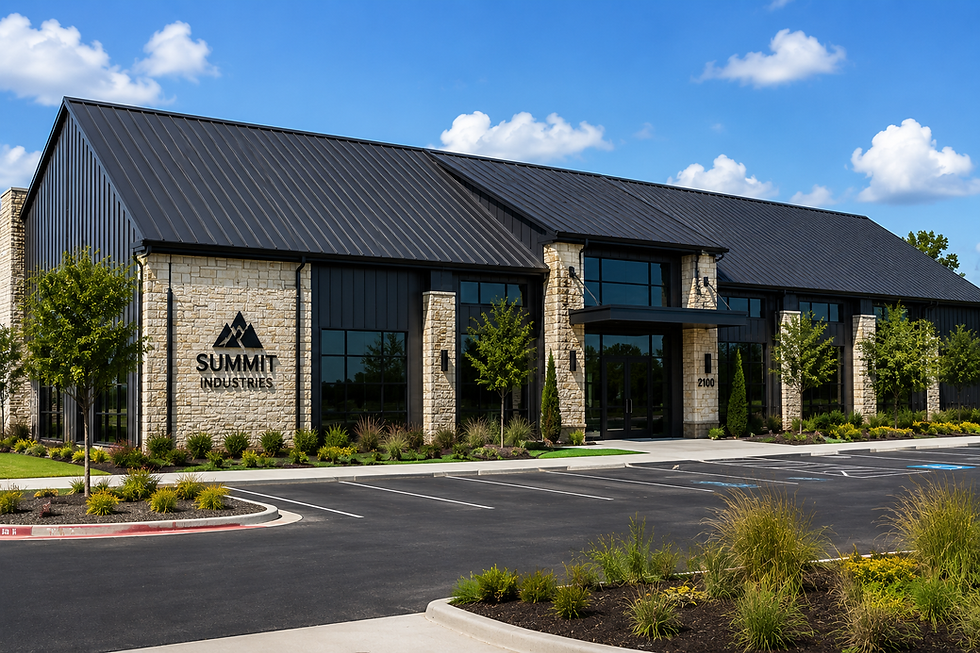
Take a drive through almost any neighborhood in Texas and you'll notice something interesting. Despite our long, hot summers, many homes and commercial buildings have dark gray, charcoal, brown, or even black roofs. If darker colors absorb more heat, why would anyone choose them?

The answer is simple: people like the way they look. Dark roofs complement brick, stone, stucco, and modern architectural styles. They can make a home or commercial building appear more upscale, add contrast, and often improve curb appeal. It's much the same reason people continue to buy black pickup trucks or dark-colored SUVs in Texas. Most people know they'll be warmer sitting in the sun, but they prefer the appearance enough that the tradeoff is worth it.
That raises an important question: Does choosing a dark roof actually make a building hotter?
The short answer is yes—but not always to the degree people imagine, and not all roofing materials behave the same way. The color of a roof certainly matters, especially in warm climates like Texas, but the roofing material, attic design, insulation, ventilation, and even the local climate all influence how much heat ultimately reaches the interior of a building.
Color Matters—But Material Matters Too
Most people learned in school that dark colors absorb more sunlight than light colors. That principle is absolutely true. A black asphalt shingle will generally become much hotter in direct sunlight than a light gray or white asphalt shingle.
However, the discussion shouldn't stop there because roof color and roofing material are two different variables. Modern roofing manufacturers have invested heavily in coatings, pigments, and reflective granules that reduce solar heat gain without dramatically changing a roof's appearance. Many products sold today reflect far more infrared energy than similarly colored roofing materials from a generation ago.

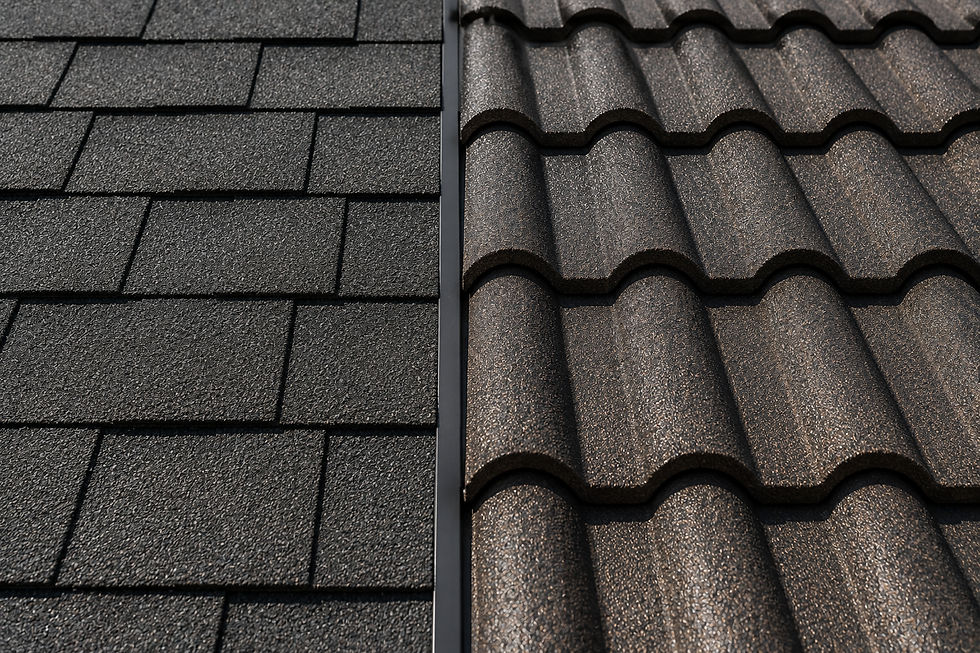
Just as importantly, different roofing materials manage heat differently. An asphalt shingle, a standing-seam metal roof, a clay tile roof, and a stone-coated steel roof may all be nearly identical in color while performing quite differently under the summer sun.
Climate Changes the Equation
Where a building is located has a tremendous influence on what makes the most sense. In northern states that experience long winters, snow, and extended periods of below-freezing temperatures, allowing a roof to absorb additional solar heat may provide a modest benefit during the heating season. While no roof color is likely to make a dramatic difference by itself, every bit of passive solar warming can help.
Texas is a different story. Most Texans spend considerably more money cooling their homes than heating them. Our summers are longer, our sunlight is more intense, and air conditioners often run for months at a time. For that reason, reducing unwanted heat gain is generally a higher priority than capturing a little extra warmth during the winter.
The "best" roof color therefore depends not only on personal preference, but also on where the building is located and how it is used.
Why Dark Asphalt Roofs Tend to Run Hotter
When business owners and homeowners discuss dark roofs becoming hot, they're usually talking about traditional asphalt shingles. Dark asphalt shingles absorb a significant amount of solar energy. Asphalt itself stores heat well, and because shingles lie directly against the roof deck, much of that heat is transferred into the roofing system over the course of a sunny day.
That doesn't mean asphalt is a poor roofing material. Properly installed asphalt roofs remain one of the most economical and widely used roofing systems in America. But if two otherwise identical asphalt roofs differ only in color, the darker roof will generally absorb more heat. This is where many conversations end—but they shouldn't.
Not Every Dark Roof Performs the Same
Suppose you compare a dark charcoal asphalt roof with a dark charcoal stone-coated steel roof. At first glance, they may appear almost identical. From a building-science perspective, however, they're very different systems.
Stone-coated steel roofing combines the strength of steel with a textured stone finish. Because of the material itself, the protective coatings, and the profile of the panels, these systems often manage heat differently than asphalt shingles. Many installations also create small air spaces that encourage airflow beneath portions of the roofing material, helping dissipate heat before it reaches the roof deck.
Similarly, standing-seam metal roofs are frequently manufactured with highly reflective finishes that reduce solar heat gain, even when the finished color appears fairly dark from the ground.
Clay tile and concrete tile have their own advantages as well. Their shape naturally creates air channels beneath the tiles, allowing heat to dissipate more effectively than with materials installed directly against the roof deck.
In other words, two roofs may be the same color while behaving very differently because the material and the roofing system influence heat transfer just as much as the color itself.
The Roof Is Only One Part of the System
Another common misconception is that whatever temperature the roof reaches becomes the temperature inside the building. Fortunately, that's not how buildings are constructed.
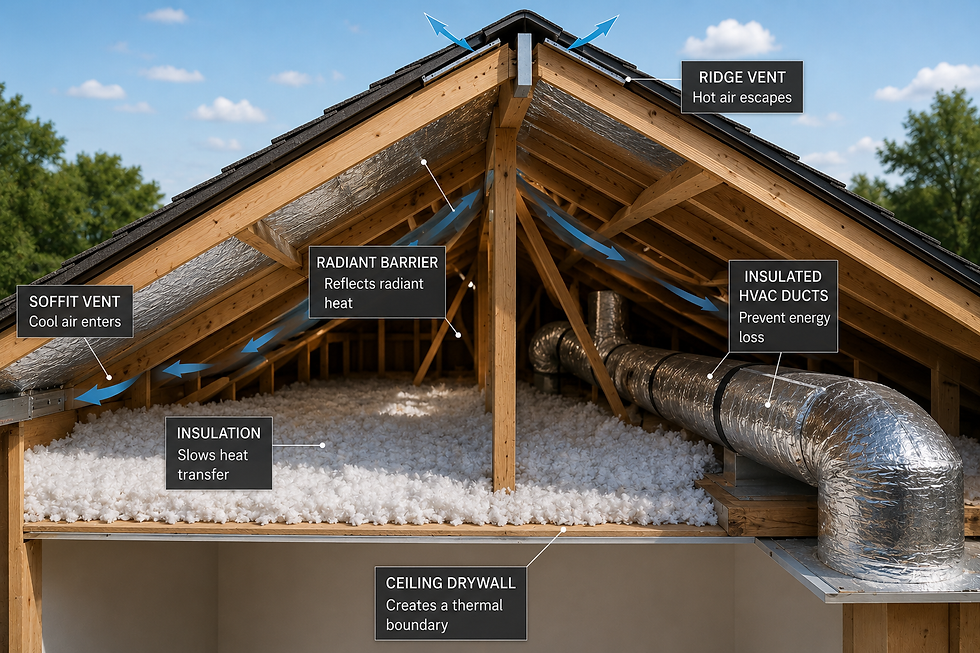
Between the roofing material and your living room or office are several layers designed to slow heat transfer. These typically include roof decking, attic air space, insulation, drywall, and in many buildings, mechanical systems located within the attic.
A well-designed roofing system doesn't rely on any one component. Instead, multiple features work together to keep conditioned air inside while limiting unwanted heat from outside.
Ventilation Can Make a Bigger Difference Than Color
Attic ventilation is one of the most overlooked parts of roof performance. As the sun heats the roof, the attic naturally becomes warmer. Proper soffit vents allow cooler outside air to enter near the eaves, while ridge vents or other exhaust vents allow superheated air to escape near the peak. This continuous airflow helps reduce attic temperatures and improves the effectiveness of insulation.
A poorly ventilated attic beneath a light-colored roof may actually perform worse than a properly ventilated attic beneath a darker roof. That's one reason experienced roofing contractors evaluate the entire attic system rather than recommending a roof color by itself.
Don't Forget the Air Conditioner
Many homeowners spend thousands of dollars upgrading shingles while overlooking something that may have an even greater effect on summer comfort: the ductwork. In many Texas homes, air-conditioning ducts run through an attic that can become extremely hot during the summer. If those ducts are poorly insulated or have leaking joints, the cool air your air conditioner just produced begins warming before it ever reaches the rooms below. Improving duct insulation and sealing air leaks can significantly improve comfort while reducing the workload placed on the HVAC system.
Radiant Barriers Still Deserve Consideration

Insulation slows the movement of heat, but radiant barriers work differently. Typically installed as reflective foil facing an attic air space, a radiant barrier reflects a substantial portion of the sun's radiant energy before it can be absorbed by other building materials. In hot climates such as Texas, this can help reduce attic temperatures and lessen the amount of heat entering the conditioned space below.
Radiant barriers are not a substitute for good insulation or proper ventilation, but they can be an effective complement to both. Although they are not emphasized as frequently as they once were, they remain a valuable option worth discussing when designing or upgrading an attic system in regions with long, hot summers.
So, Should You Choose a Dark Roof?
If your primary goal is minimizing heat gain, a lighter-colored roof generally has the advantage, particularly when comparing similar products made from the same material. If you prefer the appearance of a darker roof, however, that doesn't necessarily mean you're making a poor decision.
The more important questions are these:
What roofing material are you choosing?
Does it incorporate modern reflective technology?
Is your attic properly ventilated?
Is your insulation adequate?
Are your HVAC ducts well insulated and sealed?
Would a radiant barrier improve your particular building?
Answering those questions usually has a greater impact on comfort and energy efficiency than roof color alone.
The Bottom Line
Yes, dark roofs generally absorb more solar energy than light-colored roofs. That's simple physics, and it's especially noticeable with traditional asphalt shingles. But color is only one part of a much larger equation.
Today's roofing systems combine advanced materials, reflective technologies, ventilation strategies, insulation, and thoughtful design to manage heat far more effectively than color alone would suggest. A well-designed dark metal roof or stone-coated steel roof may outperform a lighter-colored asphalt roof in some situations, while a properly ventilated and insulated attic can dramatically reduce the effect that roof color has on indoor comfort.
If you're replacing the roof on your home or commercial building, don't focus on color in isolation. Consider the complete roofing system, your local climate, and how the building is constructed. That's the best way to choose a roof that looks great, performs well, and serves you for decades to come.
At Great American Roofing, we help property owners evaluate the entire roofing system—not just the shingles on top—so they can make informed decisions based on performance, durability, efficiency, and the unique demands of the Texas climate.


Comments